High-Frequency Trading Strategies Fail Without the Right Infrastructure. Here’s Why.

Speed has long defined high-frequency trading (HFT). Firms compete on how quickly they can ingest market data, process it, and execute trades. Over time, that race has moved from microseconds to nanoseconds, with entire infrastructure stacks built to reduce latency at every stage.
This need for speed hasn’t changed. What has changed is how decisions are made before execution happens.
Today, HFT environments are increasingly shaped by AI-driven strategies used for signal generation, anomaly detection, and real-time market analysis, alongside increasingly complex data sources ranging from market feeds to news and alternative data.
The state of AI in trading today
AI is now embedded across most trading environments.
According to McKinsey, close to 90% of organizations are deploying AI in some form. This translates into the deployment of models capable of identifying patterns and adapting to changing market conditions beyond what traditional rule-based trading systems could support alone.
However, while AI can improve decision-making, it doesn’t guarantee execution. That distinction is critical in HFT, where timing and accuracy are the difference between opportunity and loss.
Decision-making vs. execution
AI-driven models can improve signal generation, market analysis, and decision-making in trading environments. But identifying opportunities and executing trades are not the same challenge.
In HFT, execution depends on infrastructure capable of maintaining predictable latency and stable system behavior under pressure.
Ongoing concerns around volatility and market stability
Skepticism around HFT and its impact on market behavior, particularly during periods of stress, remains a point of contention. The 2010 Flash Crash, which saw nearly $1 trillion temporarily wiped from U.S. markets within minutes, is still frequently referenced in discussions around automated trading and systemic risk.
More recently, institutions and regulators have raised concerns about how AI-driven models could amplify volatility if multiple systems respond to similar signals simultaneously.
Organizations like the International Monetary Fund (IMF) and the European Securities and Markets Authority (ESMA) have pointed to the dual impact of AI: improving efficiency while increasing the potential for systemic risk, particularly when model behavior lacks transparency.
Regulation is catching up
Regulatory frameworks are evolving to address these risks, with increasing emphasis on transparency, explainability, and auditability.
In Europe, the AI Act introduces a risk-based approach to governing AI systems, with stricter requirements around transparency and accountability.
In the United States, automated trading firms already operate under established regulatory expectations around risk controls, supervision, and system resiliency. Rules such as the SEC’s Market Access Rule require firms to maintain controls designed to prevent erroneous orders and manage the operational risks associated with electronic trading, while broader market-structure rules have increased expectations around system testing and market oversight following major volatility events and trading failures.
These requirements increasingly influence how trading infrastructure is designed, particularly around monitoring, resiliency, and operational visibility.
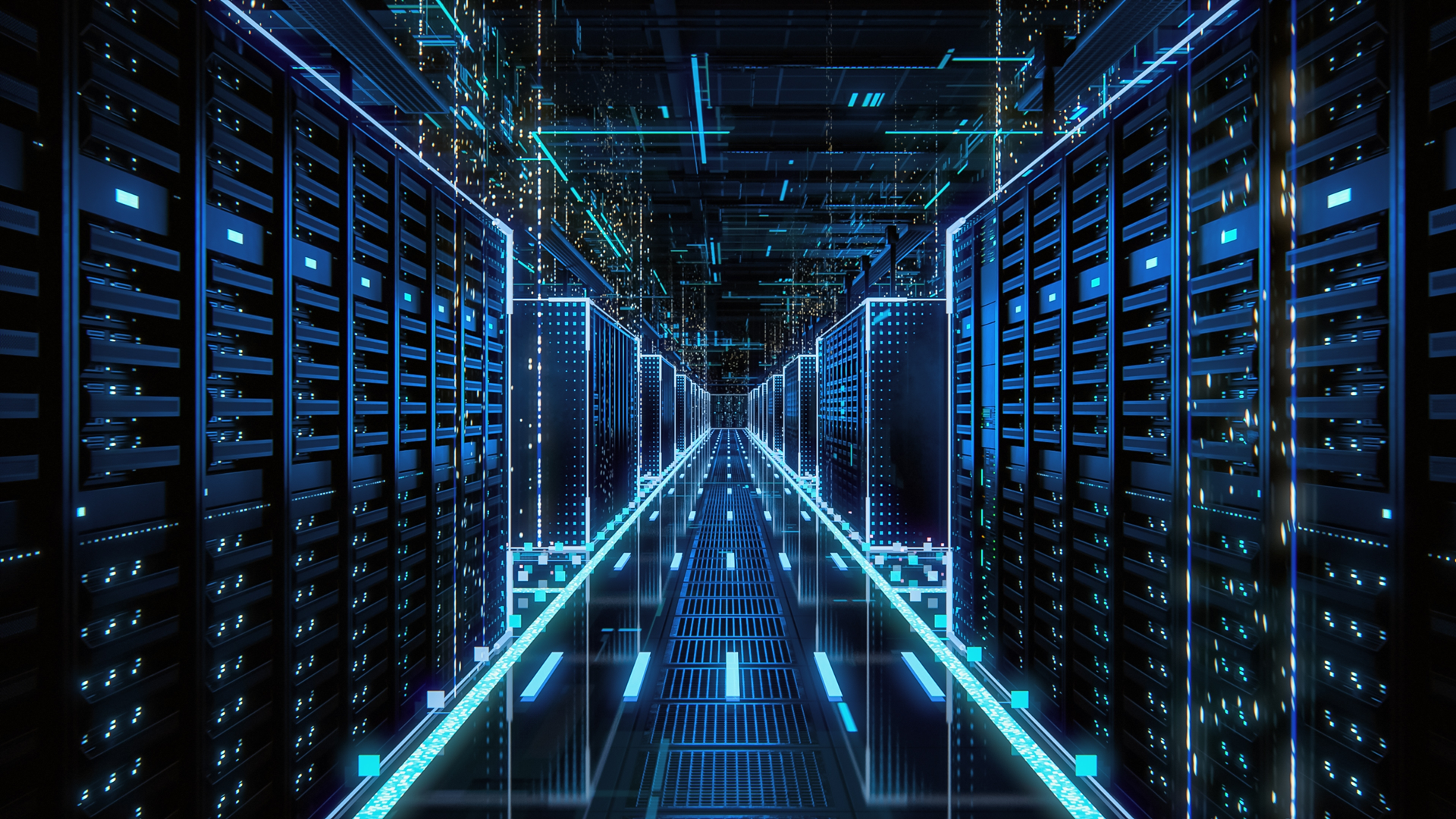
Key considerations when designing infrastructure for HFT systems
In HFT, infrastructure decisions directly affect latency, execution behavior, and system stability under load.
• Deterministic latency ensures that systems respond within predictable timeframes. Variability introduces risk, even when average performance appears strong.
• Optimized networking paths reduce delays between data ingestion and execution. Even small inefficiencies at this stage can affect trade outcomes.
• Tightly controlled hardware environments allow systems to maintain stable behavior during periods of sustained activity and increased compute demand.
High-frequency trading environments increasingly rely on both high-core-count CPU infrastructure and FPGA-based (Field-Programmable Gate Arrays) acceleration to support ultra-low-latency execution. While GPUs are increasingly used for AI-driven research, analytics, and strategy development, they are not yet widely used for real-time trade execution in the most latency-sensitive environments. This combination adds further complexity to the infrastructure level.
At the same time, physical constraints are becoming more significant. Higher power density, cooling capacity, and space limitations in colocation environments all affect how systems perform under load.
These challenges need to be addressed at the design stage. They cannot be fully resolved after deployment without impacting performance.
Defining performance in HFT
In HFT, execution speed determines whether an opportunity can be captured before market conditions shift.
As trading environments become more computationally demanding, infrastructure must maintain stable execution behavior under sustained activity.
Firms are no longer optimizing for execution speed alone. Modern HFT environments often require infrastructure that supports both ultra-low-latency trade execution and increasingly compute-intensive research and analytics workloads.
Infrastructure solutions for HFT environments
High-frequency trading strategies fail when infrastructure cannot support them in real conditions.
In HFT, real conditions mean maintaining predictable execution and stable system behavior under pressure, much like a Formula 1 car engineered to perform consistently despite differences in driver style, circuit demands, and changing track and weather conditions.
One of the growing challenges in maintaining this level of predictable performance is thermal and power management as compute density increases.
External open-loop direct liquid cooling (DLC) is emerging as a practical approach to support higher-density deployments while helping maintain stable, predictable system behavior under sustained load.
Hypertec designs and builds systems optimized for low-latency, high-performance trading environments, combining hardware, architecture, and deployment expertise to support predictable execution under sustained load.
Explore our solutions engineered for high-performance financial workloads
SOURCES
McKinsey: The State of AI in 2025 - Agents, innovation and transformation
Corporate Finance Institute: 2010 Flash Crash Overview
U.S. Securities and Exchange Commission: Regulation Systems Compliance and Integrity (SCI)
U.S. Securities and Exchange Commission: Rule 15c3-5 - Risk Management Controls for Brokers or Dealers with Market Access
More From This Topic





Ready to Elevate Your Business with Optimized Solutions?