Fast-tracking data center construction: a conversation with Dominique Ledoux | Planning, parallel execution, prefabrication and procurement
In this two-part interview series, we sit down with Hypertec Construction Project Management Director Dominique Ledoux to discuss the realities and challenges of fast-tracking data center delivery.
Hypertec Construction delivers data centers in as little as 12 months through an accelerated Engineering, Procurement and Construction (EPC) approach. By combining parallel design and construction, prefabrication, a global supplier network and decades of expertise, we help customers bring critical infrastructure online faster.
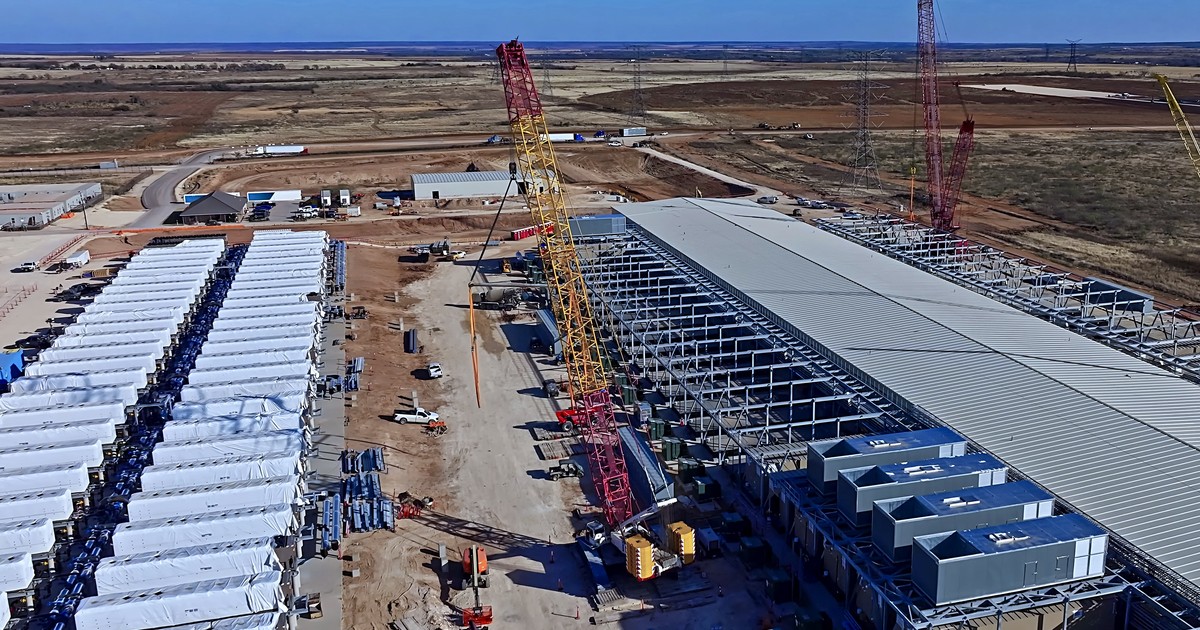
Drawing on his recent experience managing a 168 MW data center project, Dominique shares the decisions, processes and partnerships that enable our teams to deliver projects on timelines significantly shorter than those of traditional construction projects.
1. What makes managing a data center construction project fundamentally different from managing other large-scale construction projects?
The biggest difference is that data center projects are schedule-driven. Traditional construction often follows a waterfall, or linear, project management approach, where each phase must be completed before the next begins. On an accelerated data center project, we take a more agile approach and run activities in parallel.
Cost control and risk management remain essential. We have a budget to follow and profit margins to achieve, but delivery dates guide many of our decisions. When I speak with a supplier, my first question is about delivery dates. Cost is important, but we need to establish whether the supplier can meet our schedule before moving forward.
A data center also combines construction with complex mechanical and electrical infrastructure, so our team draws on both construction and industrial expertise.
2. Hypertec talks about delivering data centers in as little as 12 months. What has to happen differently from a traditional construction process to make that timeline possible?
We have to accelerate each phase, beginning with design. On our recent project, design was completed in approximately three months. We also need a general contractor capable of executing quickly and a procurement strategy that accounts for long-lead equipment and the infrastructure required for data centers. The timeline depends on the specific project and how delivery is phased. For larger facilities, delivering data halls in stages can be part of the plan.
3. We often talk about design and construction happening in parallel. What does that actually look like during a project, and where does it save time?
Design progresses through milestones, including 30%, 60%, 90% and issued-for-construction drawings. By the 30% design review, we can already determine the required capacity for major systems, including chillers and power distribution, as well as other infrastructure needed to support compute. That allows us to begin procuring long-lead equipment before the entire design package is complete. Meanwhile, we advance the remaining design, permitting and construction preparations. A geotechnical study is an important early input.
The time savings come from starting work that is sufficiently defined rather than waiting for every other activity to finish.
4. Where does prefabrication have the greatest impact on a project?
We review both construction and mechanical and electrical components for opportunities to prefabricate and standardize. One idea we are exploring is prefabricated concrete forms that could be placed directly on site, reducing formwork activities. We also simplify specifications where possible. For example, standardizing cable-tray widths and bends reduces the number of variations to design and procure.
Factory-built components can arrive ready for installation, which reduces the workforce required on site. Quality still needs to be managed throughout manufacturing: we audit suppliers and utilize partners to inspect products throughout their lifecycle.
Standardization may sometimes increase an individual material cost, so we evaluate it in the context of the time saved.
5. How does Hypertec’s global supplier and vendor network affect the way you manage procurement and project schedules?
For data centers, there is a fixed market capacity for certain long-lead equipment items. Finding suppliers who can give you the right item at the right time can be complicated. Our supplier relationships let us plan earlier and respond when a problem arises.
With major equipment suppliers, we communicate project requirements early and ask them to reserve production windows. For other components, we may divide an order among several vendors so the project is less exposed if one cannot deliver.
We also work directly with suppliers to understand and help resolve their roadblocks. Our logistics partner helps us compare sourcing options as tariffs and availability change. We recently compared steel from Canada and the United States, looking at total cost, tariffs and the different production timelines at the mills.
6. What decisions need to be made early in a projelect to protect an accelerated schedule? Conversely, what kinds of late decisions tend to create the biggest delays?
The initial project configuration and choice of partners are critical. You need the right general contractor and a clear understanding of everyone's responsibilities from the outset.
In project management, there are two ways to compress a schedule: crashing, which involves adding resources at a higher cost without necessarily achieving proportional gains in productivity, and fast-tracking, which involves executing activities in parallel. We primarily use the latter, but it comes with increased risk. The challenge is anticipating potential disruptions and responding quickly when they arise.
On one project, a supplier recommended by the client was expected to deliver hot aisle containment equipment in May. By July, nothing had arrived, and the supplier informed us that it would no longer manufacture the equipment. We had to quickly find alternative manufacturers in Canada and the United States and redistribute production to protect our delivery schedule.
Delivering on an Accelerated Schedule
Delivering on accelerated timelines takes preparation at every stage. As Dominique explains, early decision-making, coordinated execution and strong supplier relationships help our teams keep projects moving forward.
Even the most carefully planned projects face unexpected challenges. In the second and final part of our interview, Dominique discusses how Hypertec Construction manages supply-chain disruptions, quality requirements, workforce constraints and other risks that can affect project delivery.
Planning a data center project? Connect with our team to discuss your infrastructure requirements and how we can help accelerate your project.
Even the most carefully planned projects face unexpected challenges. In the second and final part of our interview, Dominique discusses how Hypertec Construction manages supply-chain disruptions, quality requirements, workforce constraints and other risks that can affect project delivery. Read Part II here.