AI Requirements Are Reshaping Data Center Construction
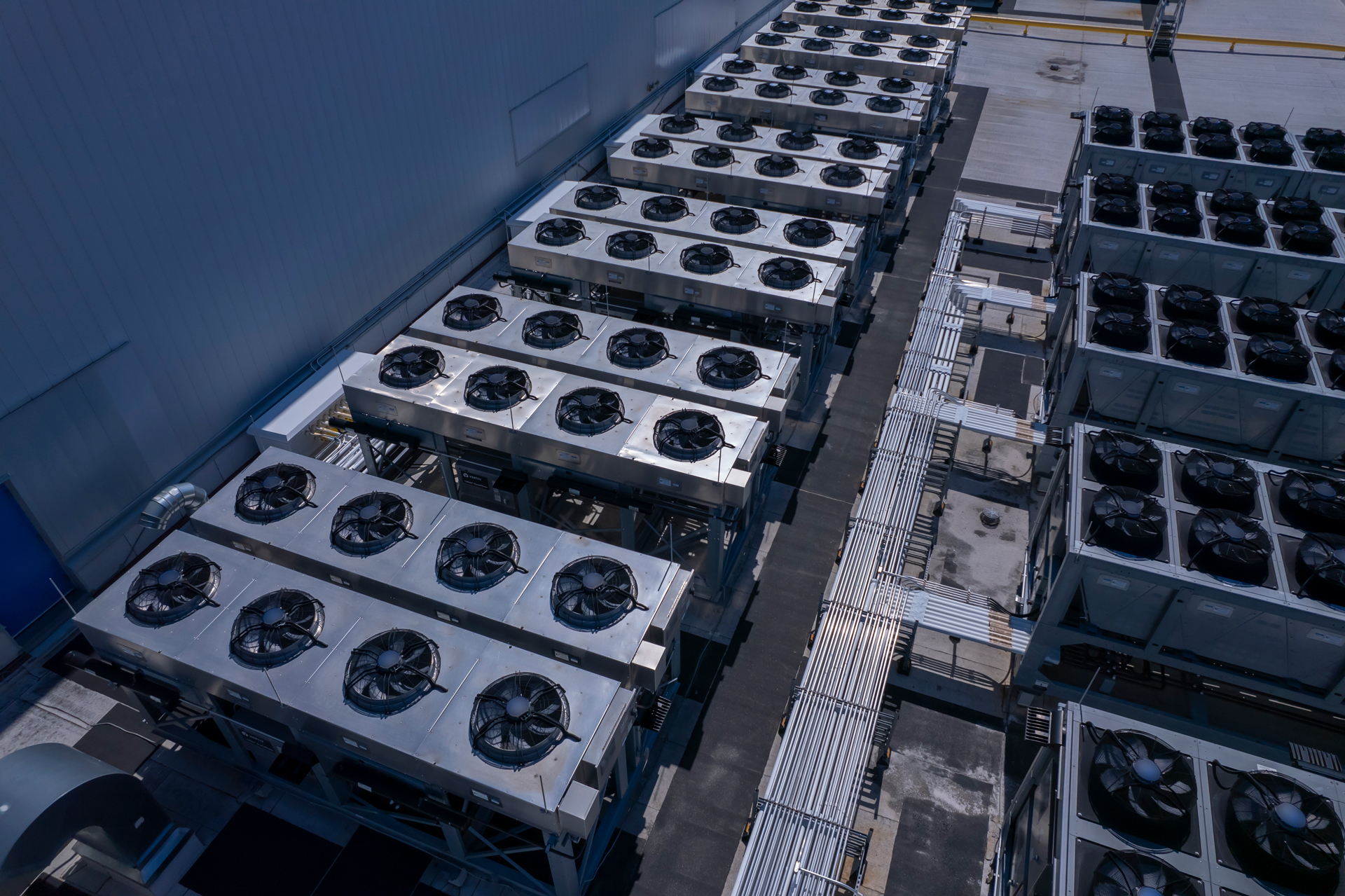
The conversation around AI often focuses on GPUs: how many can be deployed, how quickly they can be installed, and how much compute capacity they can deliver.
For data center developers and operators, AI is creating two interconnected challenges. First, the infrastructure supporting AI systems must accommodate significantly higher power and cooling densities than previous generations of compute. A rack that once required 10 to 20 kW can now require more than 100 kW, with future platforms expected to push densities even higher.
Second, organizations need that capacity quickly. Investment in AI training, inference, sovereign AI initiatives, and large-scale AI cluster developments continues to grow. The International Energy Agency (IEA) projects that electricity demand from data centers will more than double by 2030, with AI expected to be a major driver of that growth.
The ability to bring new infrastructure online has become a competitive advantage. Data centers must support higher-density workloads, and organizations need that capacity available on timelines that keep pace with AI deployment.
AI is therefore changing both how data centers are designed and how they are built.
Hypertec Construction helps organizations address these evolving requirements by designing for higher-density AI workloads and bringing new data center capacity online in as little as 12 months.
How Is AI Changing the Design Baseline?
For many years, data center design followed relatively predictable patterns. Enterprise workloads could typically be supported using conventional air-cooling systems operating within established power ranges.
Rack densities now look very different:
- Traditional enterprise rack: 10-20 kW
- NVIDIA H100 rack (air-cooled): up to 40-50 kW
- NVIDIA Blackwell GB200 NVL72 rack: approximately 130 kW
- NVIDIA Vera Rubin platforms: projected at 150+ kW
- Future roadmaps: discussions of 600 kW racks by 2027 and significantly higher densities later in the decade
These increases affect every part of the facility's infrastructure. Higher compute density requires more power and generates more heat. Facilities must be able to distribute power, remove the resulting heat, and support future growth without creating operational constraints.
How Much Power Does AI Actually Require?
A modern AI rack can consume roughly ten times the power of a traditional enterprise rack, placing additional pressure on utility connections, substations, transformers, backup power systems, and cooling infrastructure.
Across North America, power availability is influencing site selection and project timelines. Industry surveys show that power availability is now one of the leading concerns for data center operators planning future capacity.
Organizations can often procure AI hardware faster than they can secure the infrastructure required to support it. As a result, power availability planning is now one of the earliest and most important stages of an AI deployment strategy.
Why Can't Existing Data Centers Simply Be Upgraded?
Retrofitting an existing data center for AI is possible, but higher-density systems often require changes that extend well beyond adding servers or increasing available power.
Most legacy facilities were designed for air-cooled racks in the 10–20 kW range; even with enhancements like rear-door heat exchangers, air cooling tops out around 30–40 kW.
Current-generation AI systems can exceed three times that density. Accommodating those workloads frequently requires:
- Direct liquid cooling infrastructure
- Coolant distribution units (CDUs) and new piping
- Expanded heat rejection capacity
- Additional electrical infrastructure
- Structural modifications
The scope of these upgrades will vary by facility, making retrofit feasibility an important consideration when planning new AI capacity.
When Does Liquid Cooling Become Necessary?
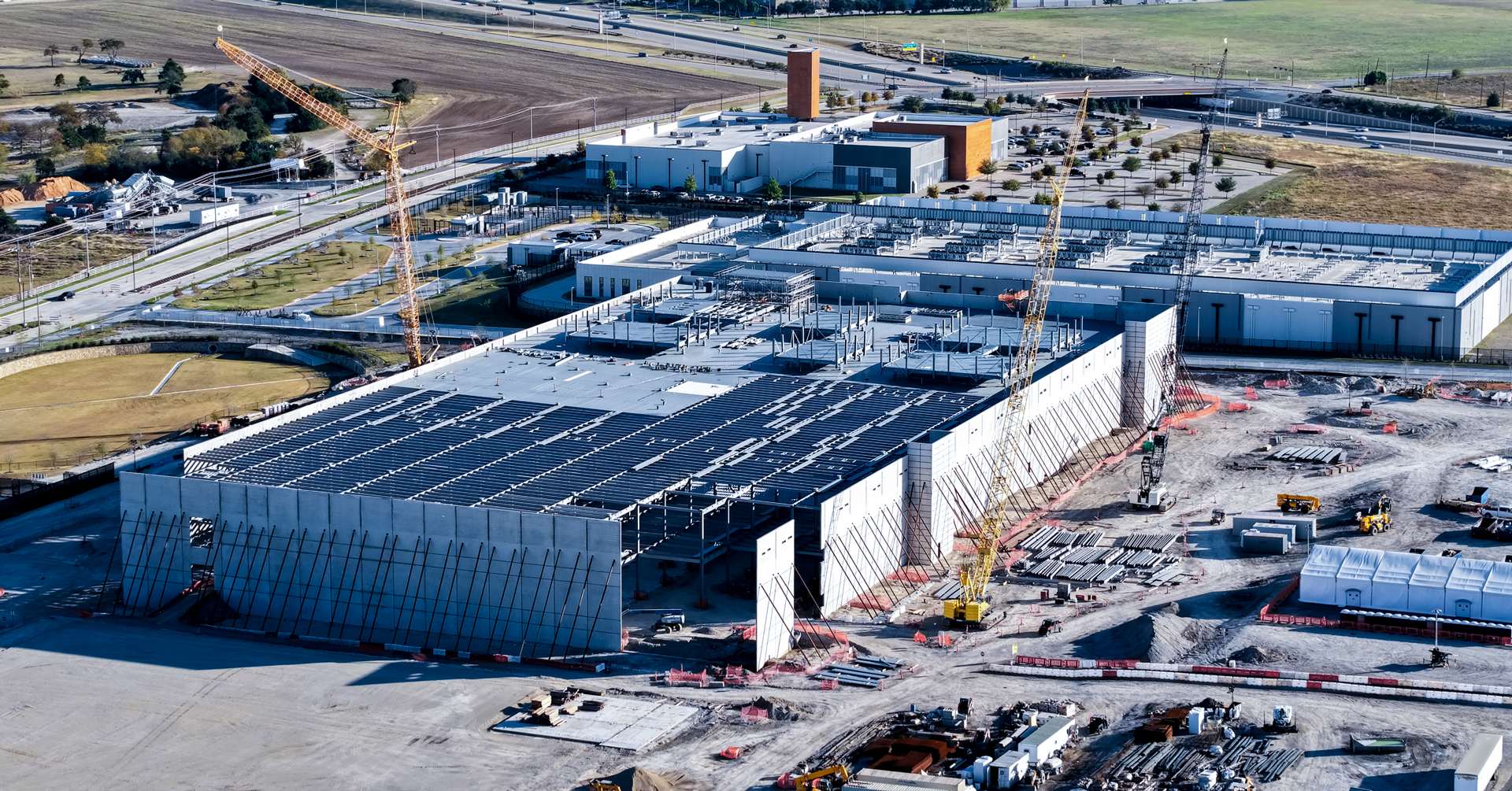
AI systems generate significant amounts of heat, making cooling one of the most important infrastructure decisions in a high-density data center. The cooling approach must be able to manage the heat generated by the equipment while supporting the density, efficiency and operational requirements of the facility.
Air cooling
Air cooling remains effective for many workloads and can support approximately 30–40 kW per rack when combined with technologies such as rear-door heat exchangers. Uptime Institute notes that air cooling often becomes impractical beyond roughly 50 kW per rack, which is driving the adoption of liquid cooling technologies in higher-density AI environments.
Direct liquid cooling
As rack densities increase, direct liquid cooling can remove heat more efficiently by bringing coolant directly to heat-generating components such as CPUs and GPUs. The appropriate cooling strategy will depend on the specific hardware and density requirements, but general guidelines include:
- Less than 20 kW per rack: Air cooling
- 20–80 kW per rack: Hybrid or direct liquid cooling approaches
- Above 80–100 kW per rack: Advanced liquid cooling is typically required
Immersion cooling
For particularly high-density AI and HPC environments, immersion cooling offers another approach by submerging equipment directly in dielectric fluid. This can provide high heat-removal capacity while also improving space utilization.
The right cooling strategy ultimately depends on the heat load and density of the selected compute infrastructure, alongside factors such as power availability, water strategy, operational requirements and long-term cost.
Read the report: Learn how immersion cooling is evolving density and design
What Happens When Power and Cooling Requirements Aren't Met?
Power and cooling constraints have operational and financial consequences.
When facilities cannot adequately support AI workloads, organizations can face:
- Thermal throttling that impacts performance
- System instability
- Unplanned downtime
- Equipment damage caused by overheating
- Delayed AI deployments
- Increased operating costs
- Lost productivity and revenue opportunities
Higher-density AI environments make these risks more difficult and more expensive to address after deployment.
Read the blog post: Understanding immersion cooling for data centers
Power Strategy Is Now a Construction Decision
AI power requirements affect where a data center can be built, when construction can begin, which equipment must be secured early, and ultimately how quickly new capacity can come online.
"The biggest challenge we're seeing is that GPU power requirements are increasing much faster than traditional data center design cycles," says Marco Modesto, Director, Construction Engineering at Hypertec. "Organizations can't design around today's rack density alone. They need infrastructure that can adapt to the next two or three generations of AI hardware."
Utility capacity comes first
Utility capacity must be secured early. Long-lead infrastructure such as transformers, switchgear, generators, and cooling systems often determines project schedules more than construction activities themselves.
Procurement can determine the schedule
For Hypertec Construction, managing procurement risk means aligning design, procurement, and construction from the beginning.
Critical infrastructure decisions are addressed early so procurement and construction can move forward in parallel. Combined with prefabrication and an established international vendor network, this approach helps reduce schedule risk while accelerating deployment timelines.
Find out how to accelerate your data center deployment
Designing for the Next Generation of AI
Most data centers will outlive several generations of AI hardware.
A data center designed around today's density requirements may face limitations much sooner than expected if future growth is not considered during construction.
That’s why organizations should focus on adaptability rather than a fixed density target.
Facilities designed for long-term growth should incorporate scalable electrical capacity, modular cooling systems, expansion space, reinforced infrastructure pathways, and emerging technologies such as 800VDC power distribution. Built this way, a data center can absorb new generations of hardware as compute requirements change, without the need for major infrastructure overhauls.
Infrastructure and Compute Need to Be Planned Together
As the industry looks toward gigawatt-scale AI infrastructure, the relationship between compute and the facilities that support it will become even more important. Building an AI-ready data center requires an understanding of the workloads, hardware, power requirements, and cooling technologies it is expected to support.
Hypertec's experience spans both data center construction and the high-performance computing environments operating inside those facilities, including direct liquid-cooled systems, immersion-cooled platforms such as TRIDENT, and AI factory deployments.
Organizations that plan infrastructure and compute together from the outset will be better positioned to accommodate new generations of AI systems as density and capacity requirements continue to evolve.
SOURCES
Data Center Knowledge: AI Drives Data Center Uncertainty in Uptime’s 2026 Survey
Data Center Knowledge: AI Rack Density’s Real Limits - Power, Cooling, Failure Risk
International Energy Agency: AI is set to drive surging electricity demand from data centres while offering the potential to transform how the energy sector works
More From This Topic


Ready to Elevate Your Business with Optimized Solutions?
