Planning a Data Center in the Next 6 to 12 Months? Prefab First. Power First. Or Expect Delays.
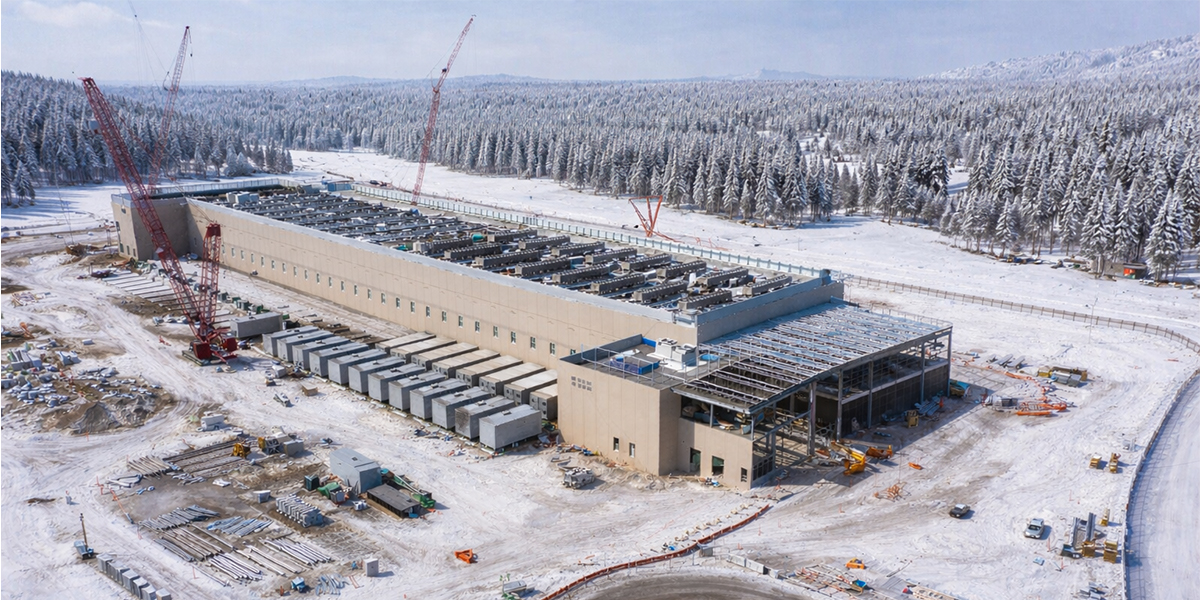
The next 6 to 12 months will reward execution discipline, not optimism. Utility power timelines, labor availability, cooling architecture, and procurement lead times now define the schedule.
A project plan is only as real as the constraints it accounts for. When early assumptions miss, the impact is rarely contained to a few weeks. Designs get reworked, scopes expand, and budgets absorb change orders that were avoidable. Confidence erodes among the stakeholders who control permits, capital, and risk tolerance.
At Hypertec Construction, this reality has shaped how we deliver. After 20 years building data centers, the market is unusually clear: AI is driving density higher, and construction capacity is tightening at the same time. The programs that hit dates reduce field complexity, standardize what can be standardized, and pull uncertainty forward. Our prefab first, power first delivery model is the result of those lessons, refined across two decades of execution.
The decision that sets the tone for the entire program
Many programs still begin with a concept layout and a target date, then attempt to resolve delivery once design momentum builds. That sequence creates lock in before the real constraints are fully known.
A stronger start begins with the delivery model. The delivery plan determines how the facility should be designed, packaged, procured, and sequenced. When delivery is defined early, interfaces get cleaner, handoffs get clearer, and the schedule reflects production and installation realities rather than best case assumptions.
A useful line to carry into internal discussions: a data center schedule does not slip at the end. It slips the day decisions get deferred.
Prefab first changes how the schedule behaves
Under the right conditions, a prefab first approach can cut the construction timeline roughly in half by running factory production and site work in parallel.
This approach differs from regular data center construction because it shifts the center of gravity from the site to the factory. That changes sequencing, decision timing, and how progress is measured. It also reduces field labor exposure at a time when skilled trades and commissioning talent are stretched across competing builds.
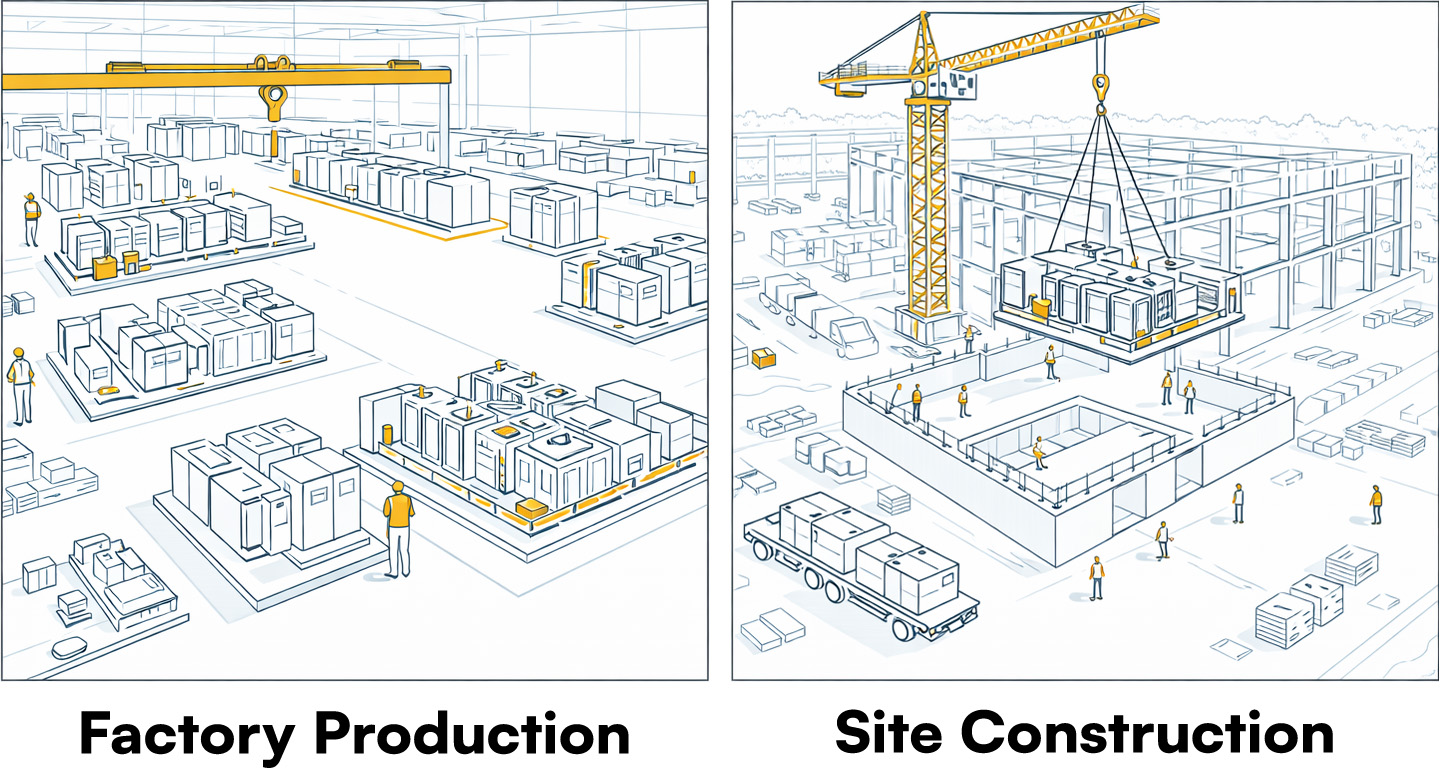
At Hypertec, prefabrication is not a bolt on. It is a delivery system built from what works in the field: repeatable assemblies, clean interfaces, and factory quality gates that translate into faster, more predictable installation on site. Mechanical skids, modular electrical assemblies, and packaged cooling components are built and tested off site while the site and shell move forward. That parallelism is where the schedule compression comes from.
Another line that tends to focus decision making: prefab only delivers speed when interfaces are frozen early and change control is enforced without exceptions.
Power is the real gate
A site can look ideal and still fail the program on the one metric that matters: power delivery on time. A site is not real until power delivery is contractible on a date.
AI driven demand is colliding with grid constraints in many regions. The challenge is not only megawatts. It is interconnection complexity, upgrade scope, and dependencies owned by parties outside the fence line. These issues rarely surface early unless the team forces them to, and once they surface late, they tend to dominate the schedule.
Power strategy needs to be treated as a formal workstream with milestones and decision gates before site commitment. It also requires stakeholder alignment beyond the utility. As loads scale, community and government stakeholders scrutinize grid impact, resiliency, and local benefit. Early engagement keeps options open and reduces the chance of late stage friction during permitting.
Cooling architecture sits on the front page
Cooling used to be refined after the electrical one line and layout were mostly settled. High density AI programs do not allow that.
As platforms move from H100 class systems toward B200 and GB200, and as alternative accelerators such as AMD’s MI355X show up in planning cycles, higher capacity cooling approaches are being pulled into early design. Direct to chip has become the most common bridge because it supports higher heat loads while fitting into familiar operational practices and packaging well into repeatable deployment blocks.
Immersion enters the discussion when density targets, efficiency goals, and footprint constraints make full liquid compelling. Many implementations see roughly 5 to 10 percent improvement in server power use, which is meaningful at scale. Cooling choice drives electrical architecture, procurement, and commissioning. When it moves late, everything moves with it.
Procurement can protect the schedule, or quietly destroy it
Long lead items are not a footnote. Switchgear, transformers, generators, cooling plant components, and specialized liquid cooling hardware often dictate critical path.
Programs that stay on track treat design as a series of deliberate freezes that unlock fabrication and purchasing at the earliest responsible moment. Interfaces get locked early because fabrication depends on them. Procurement becomes a schedule protection strategy, not an administrative phase that follows design completion.
This is where prefabrication reinforces procurement. Repeatable skid strategies reduce custom engineering churn, simplify sourcing decisions, and create clear inspection and acceptance points before equipment arrives on site.
The tradeoffs and risks of prefab first
Nevertheless, prefab first is not a free win. It introduces constraints that need to be managed deliberately: earlier design freezes limit late changes, logistics and transport become real schedule variables, crane picks and laydown space must be planned, and vendor quality can either compress risk or amplify it. Mature delivery teams mitigate these risks with disciplined interface management, standardized connection points, factory acceptance testing, shipping and installation planning built into the master schedule, and a vendor strategy that favors proven production capability over one off customization. At Hypertec, these controls are part of the method, not an afterthought.
Commissioning and efficiency need to be built into the sequence
Commissioning failures usually trace back to decisions made months earlier that undermined testability. If systems cannot be tested progressively, the end of the schedule becomes a single congested problem.
Prefabrication helps when it is paired with disciplined factory acceptance testing and standardized test plans. Packaged systems can be validated before delivery, field debugging shrinks, and ramp across phases becomes smoother.
Efficiency belongs in the same planning window. Energy becomes waste heat, and stakeholders increasingly want to know what happens to it. Heat reuse is moving toward expectation in many markets, whether through district heating, industrial applications, or emerging models that pair waste heat with carbon capture economics.
Water strategy requires similar realism. Waterless design can be achieved, but often with an energy penalty. In water scarce regions, water dependent choices can become an operational and political risk. In water abundant regions, wasteful use still invites scrutiny. The strongest designs align choices to local constraints and avoid oversizing for a small number of extreme hours at the expense of the other 8,700.
Top mistakes to avoid
- Treating prefabrication as a late cost tactic instead of the foundation of delivery
- Designing bespoke rooms and systems that cannot be fabricated, shipped, installed, and tested efficiently
- Committing to a site before power delivery timelines and upgrade scope are validated
- Allowing long lead procurement to trail design, then redesigning around availability
- Assuming air cooling will carry densities it cannot reliably support
- Pushing cooling decisions late, then absorbing downstream redesign and schedule drag
- Discovering testability gaps at the end because commissioning was not planned into the build sequence
- Engaging stakeholders late and absorbing avoidable friction during permitting.
Ready to Elevate Your Business with Optimized Solutions?